How Casino Settings Carry Memory in Cà Mau Stories
Explore casino settings and memory in Cà Mau stories through a family’s tense interruption, tracing how one uncertain claim changes what people say and do.
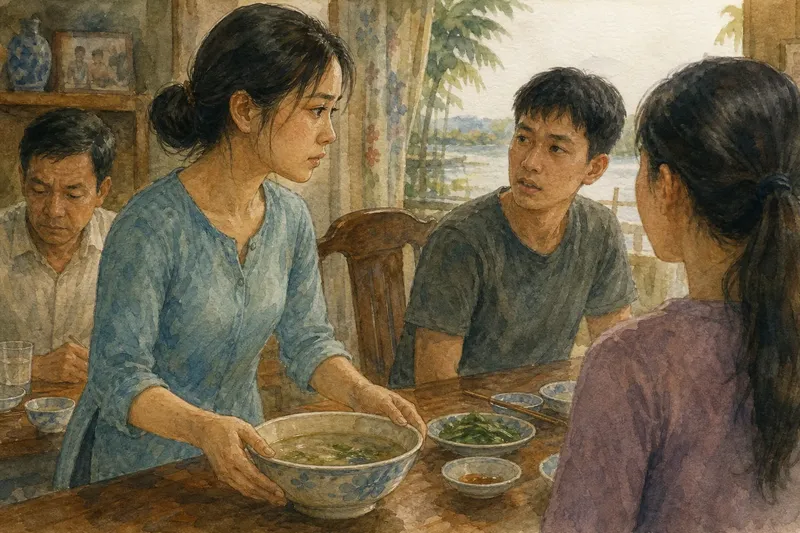
How can a casino setting carry memory in a Cà Mau story without turning a rumour into local fact? Begin with a concrete moment: a family meal pauses when someone asks why a cousin has stopped speaking to an aunt. The casino enters as part of the accusation, but the silence at the table is what the characters must deal with.
The interrupted meal
Imagine an invented family gathering where Lan is carrying a bowl of soup to her uncle when her cousin Minh says he heard that their aunt had visited a casino. Lan stops, sets the bowl down, and asks who saw her there. Minh cannot name a witness. The uncle changes the subject, while Lan notices that her cousin will not meet her eye.
That interruption gives the setting a human consequence without claiming that the scene reflects a Cà Mau custom. The story can follow Lan’s embarrassment, Minh’s reluctance and the uncle’s choice to move on. Their awkward exchange supplies memory: later, Lan may remember the bowl cooling on the table whenever the accusation comes up.
Objects that hold memory
A remembered object can make a scene particular without turning regional detail into decoration. Choose something already present in the action: a serving bowl, a folded note, a chair pulled away from the table. Give it a job in the scene. The bowl changes hands; the note remains unread; the empty chair makes someone’s absence noticeable.
Keep the object connected to a character’s attention. Lan might recall the bowl because she had to set it down when the accusation began, not because it stands for Cà Mau as a whole. That distinction lets the story build intimate memory from a fictional moment rather than borrowing authority it has not earned.
Separate claim from fact
Show how each character knows what they say. A direct witness can describe what they saw; someone repeating a relative’s account should identify it as hearsay. If the source disappears, let the uncertainty remain visible in the narration and dialogue.
- Direct observation: Check whether the speaker was present; if yes, limit the account to what they could see or hear, and if not, attribute it to the person who told them.
- Unclear source: Check whether the speaker can name the first person who made the claim; if yes, show that route, and if not, call it an unverified rumour or leave it out.
- Added motive: Check whether a version assigns someone a reason for acting; if a character has evidence, identify it, and if not, keep the motive as that character’s guess.
- Changed relationship: Check what the listener does after hearing the claim; if trust or behaviour shifts, keep the consequence, and if nothing changes, shorten the exchange.
- Real location: Check whether naming a real casino is essential; if it is, review whether invented conduct could be mistaken for an accusation, and if it is not, use a fictional venue.
- Seasonal interruption: Check whether a specific change in routine alters the conversation; if it does, connect it to the characters’ choice, and if it only supplies atmosphere, remove it.
It is not worth adding a string of local names or seasonal references just to make a scene sound authentic. One awkward silence, interrupted task or remembered object can carry more weight if it changes what a character chooses to say.
Build a memory trail
For a revision, write down the scene’s starting claim, the person who repeats it, the detail that changes, and the action that follows. Then check that each transition is visible on the page. If a character’s later memory differs from what happened, make the difference part of their viewpoint rather than quietly rewriting the event as fact.
Say the draft begins with three pieces of information: Minh says he heard the casino story from his cousin; the cousin did not name a witness; Lan has not spoken to her aunt since the meal. First, Lan asks Minh for the witness’s name. He cannot supply one, so she tells her sister only that a story is circulating. Next, her sister asks the aunt directly whether she wants to discuss it; the aunt declines. The resulting decision is to leave the claim unresolved and show Lan remembering the cooling bowl and the aunt’s refusal, rather than narrating the casino visit as confirmed. The trade-off is deliberate: the story gains a clear emotional consequence but does not provide a neat answer.
Questions about casino memory?
How can a casino rumour affect a family story?
Attach the rumour to an observable choice, such as a conversation that stops or a relative who asks for a source. Keep the claim’s uncertain status clear while showing how the characters respond.
How do I write local detail without generalising?
Use a detail that belongs to the particular invented scene, such as an object someone handles or a task interrupted. Avoid presenting one character’s habits or beliefs as typical of Cà Mau residents.
Should I name a real casino?
Use a real name only if the plot depends on that identity and the portrayal has been carefully checked. Otherwise, a fictional venue reduces the chance that invented behaviour will be read as a claim about identifiable people.
When should a remembered detail return?
Bring it back when it changes how the character understands the earlier moment or behaves now. If it adds no new meaning, leave it out rather than repeating it as atmosphere.
Keep uncertainty visible
In a Cà Mau story about casino memory, trace every claim to the character who first voices it and let the reader see what that person knows. A cooling bowl, a question left unanswered or a relative’s refusal can remain in memory even when the rumour itself cannot be settled. That is a useful distinction: the scene can preserve what the family experienced without pretending to establish what happened elsewhere.