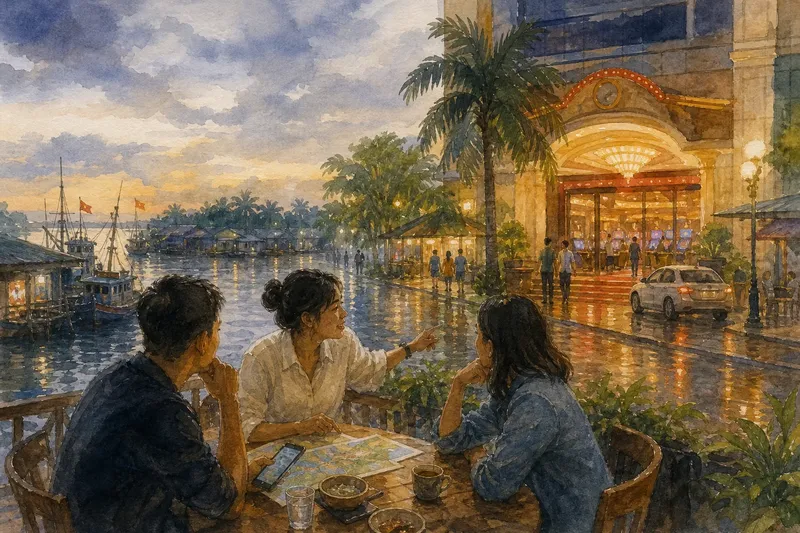
Rainy Season Leisure and the Long Afternoon in Cà Mau
Rainy season leisure in Cà Mau can give a fictional afternoon a clear turning point; build a scene around a changed plan, a specific choice and its consequence.
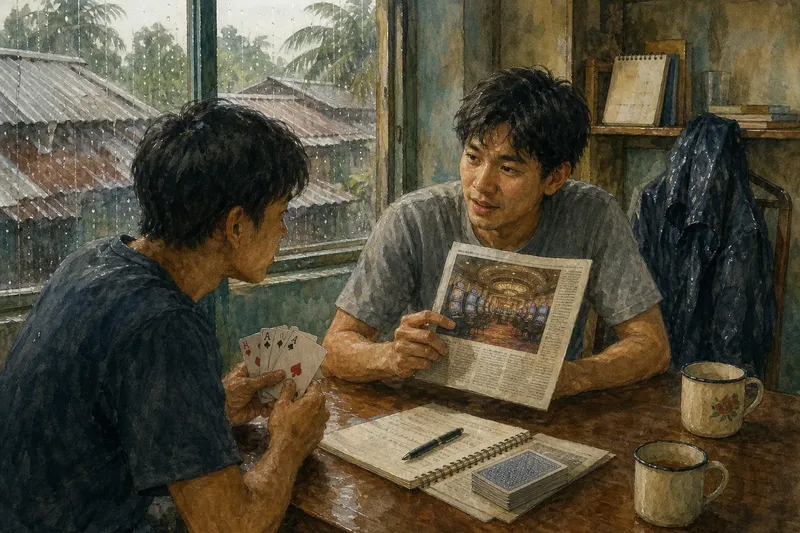
What can a rainy afternoon do for a story set in Cà Mau? Rainy season leisure in Cà Mau can shape a scene through the objects, sounds and plans a particular character notices. A damp bag, a window rattling in the rain or a message about a postponed meeting can set events in motion without suggesting that one household represents the region.
Imagine an invented scene beginning with two friends at a rented room: one has a deck of cards and a notebook, while the other has saved a newspaper clipping about a casino in a faraway city. They hear rain against the roof, put the notebook on a dry shelf and decide not to leave yet. One friend turns the clipping over and asks what makes a casino story interesting; the other begins describing a fictional character who dislikes crowds. The observable result is a conversation that replaces the planned walk and gives the story a new subject. These are invented quantities and actions, not observations about local life.
Choose one weather detail
Start with something the viewpoint character can directly perceive: rain striking a metal roof, a wet sleeve, a path that looks slick, or a change in the light. Let that detail prompt an action or a question. Avoid adding a flood, a blocked road or a travel disruption unless the scene supports it and you can verify any real-world claim.
Keep the chain straightforward: the character notices a detail, decides what it means for the immediate plan, then does something. If the weather changes nothing in the scene, trim the description rather than piling on more rain imagery.
Build a specific choice
Give the afternoon a decision that belongs to these characters. They might delay leaving, move a paper away from a wet sill, or switch from a walk to a conversation. One person may want to wait; another may be glad to stay in. Those differences reveal individual motives, not a shared Cà Mau custom.
- Observe whether the route in the scene is visibly wet; if a character considers it unsuitable, have them postpone the outing, and if not, let them continue or pick another destination.
- Observe whether an item near the doorway is getting damp; if it is, move it under cover, and if it is already dry, leave it there and choose another consequence for the rain.
- Observe whether the characters disagree about leaving; if they do, write a short exchange and a decision, and if they agree, show the next action without manufacturing an argument.
- Observe whether the rain makes speech hard to hear; if it does, have someone pause or repeat a line, and if it does not, keep the conversation clear.
- Observe whether the planned activity needs an outdoor setting; if it does, delay it or choose a different activity, and if it can happen indoors, show how the characters adapt it.
- Observe whether a geographic detail has been verified; if it has not, omit it or present it clearly as a character’s uncertain impression, and if it has, include only the detail the scene needs.
Use casino themes as fiction
A casino can enter through a character’s story, memory or imagined destination. Make clear who brings it up and what they want from the conversation. One invented character might be drawn to the noise and lights; another might prefer a quieter setting. Their responses should remain individual rather than being presented as typical of Cà Mau residents.
For a grounded contrast, place the character’s imagined casino beside the room they actually occupy: rain on the roof, a damp jacket on a chair, or a card left face down. The imagined setting can affect the conversation, but it should not replace verified details about the real place where the story happens.
Questions about rainy scenes?
How can rain change a story?
Give the weather a visible consequence, such as a delayed outing or a plan moved indoors. Show the character’s decision and what they do next.
How should I describe Cà Mau?
Use regional details you can verify, and separate them from an invented character’s impressions. If you cannot support a geographic claim, leave it out.
How can a casino fit the scene?
Present it as a character’s account, memory or imagination, then let that character’s own motives shape the exchange. Do not frame a fictional response as a local custom.
Which details can I cut?
It is not worth making every cup, raindrop or household object symbolic. Keep details that prompt an action or clarify a choice; remove those that do neither.
Track the scene’s change
Say the two friends begin with one planned walk, one deck of cards and one newspaper clipping. They hear rain, move the notebook to a dry shelf, set aside the walk and discuss the fictional casino character in the clipping. The expected observable output is a change from an outdoor plan to an indoor conversation. If the clipping does not spark a choice or reveal a motive, the writer can remove it and let the rain alter the plan on its own.
For rainy season leisure in Cà Mau as a subject for fiction, keep the scene’s claims proportionate to its evidence: distinguish what the characters see from what the narrator states as fact. Verify regional details before presenting them as real, and let the characters’ decisions carry the afternoon.