How Casino Themes Meet Cà Mau’s Seasonal Rhythms
Write casino themes into a Cà Mau story with a clear character motive, seasonal texture and a firm distinction between fiction and local custom.

How do you write casino themes into a Cà Mau story without making fiction sound like local custom? Start with a character’s specific reason for encountering the motif, then let the region’s seasonal rhythms shape the story’s sense of time and memory. Keep those choices distinct from claims about how people in Cà Mau live.
Build around memory
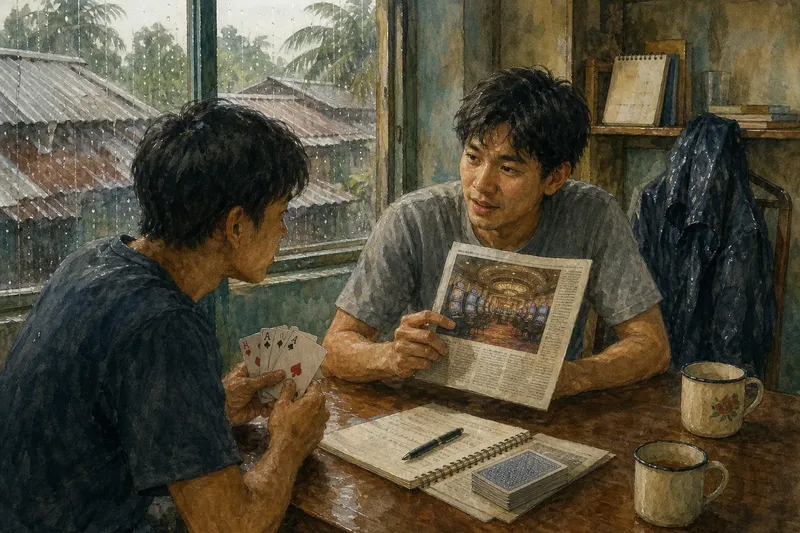
A casino motif can belong to a character’s past rather than to the setting’s public life. It might be a card game remembered from a journey, a family story about luck, or a private habit of treating a risky decision as a wager. These details give the motif emotional weight without implying that casino activity is customary in Cà Mau.
Decide what the character associates with it: escape, pride, regret, suspense or a promise they once made. Then let that association affect how they interpret an ordinary event. A character who connects a game with an absent sibling, for example, may respond to a familiar phrase differently from someone who sees the same phrase as a joke.
Use storytelling traditions carefully
Stories can travel through families and friendships, changing as different people retell them. A fictional narrator might hear an account of a lucky choice, then question whether the teller is remembering accurately or shaping the story for effect. That uncertainty can provide a plot without presenting one invented tale as a Cà Mau tradition.
Give the account a clear owner. Identify who tells it, who doubts it and what each person wants from the exchange. If the story refers to a real custom, place or community, verify that claim with suitable local material or knowledgeable people. If you cannot support it, make the invented nature of the account clear or leave the claim out.
Let motifs change meaning
Rather than using casino imagery as a label for Cà Mau, let it shift meaning between characters. One person may use a wager as a metaphor for trust; another may reject that comparison because it turns a serious promise into a game. The disagreement can reveal their values without asking either person to represent a whole community.
Choose a small number of recurring details, such as a deck of cards, a remembered phrase or a glowing game icon. Give each one a different meaning as the story develops. Avoid adding invented casino venues or local rituals merely to make the setting seem more vivid.
Keep claims in proportion
Use this revision list to separate a character’s experience from statements about local life. Each item calls for a decision based on what the draft actually establishes.
- Check the source of a tale: If a character tells an invented family story, identify it as that character’s account; if the narration calls it a Cà Mau tradition without support, narrow the wording or remove the claim.
- Check the casino reference: If a game, advert or venue is fictional, make that clear; if the draft implies a real local establishment, verify it or remove the implication.
- Check who holds a belief: If one character sees luck as meaningful, keep the belief attached to that person; if the narration presents it as shared by residents, provide support or rewrite it as an individual view.
- Check seasonal language: If a seasonal detail reflects a character’s memory or observation, keep its scope personal; if it claims a universal local experience, verify the claim or make it more precise.
- Check cultural labels: If a phrase names a practice or group, confirm that it is appropriate and supported; if you cannot, use neutral wording or omit it.
- Check the narrator’s authority: If a sentence sounds like factual reporting about Cà Mau, support it with a reliable source; if it is invented, signal that it belongs to the fiction.
It is not worth the effort to scatter local-sounding expressions or casino imagery across a scene simply to suggest authenticity. A detail should reveal a relationship, memory or conflict; otherwise, it is decoration carrying more cultural weight than the story can justify.
Work through a scene
Say you are drafting an invented scene with Lan, who has kept a playing card from a journey with her older brother. She finds it while sorting a box of letters before a family visit. First, let the card bring back the brother’s old habit of calling difficult choices “a wager”; then have Lan decide whether to tell him she has postponed a conversation. The card now carries a private memory and prompts an action, while the scene makes no claim about local gambling customs or a real casino in Cà Mau.
On revision, underline the concrete actions and circle sentences that describe culture or place. If the scene still works after you remove an unsupported cultural claim, leave that claim out. If a seasonal reference matters only as personal memory, state whose memory it is rather than presenting it as a shared regional pattern.
Which details need care?
Can a character tell an invented local tale?
Yes, but make clear that it is a story told by that character, not an established Cà Mau tradition. If the tale draws on a real custom, check the details with suitable local sources before presenting them as fact.
Can a casino motif carry family history?
Yes. Tie the motif to a specific memory, object or relationship, and show how that connection affects the character’s choices. Do not treat one person’s experience as evidence of a community-wide habit.
How should seasonal memories appear?
Keep them anchored to a person, moment or family account unless you have support for a broader description. A character can remember a season differently from another character without either memory defining Cà Mau as a whole.
What should happen to unsupported customs?
Remove them, verify them with appropriate local knowledge, or clearly frame them as fictional invention. Do not let a confident narrator turn an unverified detail into an apparent fact.
Separate story from custom
When writing casino themes into a Cà Mau story, make each motif answer to a character’s memory, desire or disagreement. Use seasonal rhythms as part of a person’s remembered experience, not as a shortcut to cultural authority. The search phrase “casino themes in Cà Mau” should lead readers to fiction that is clear about what it invents and careful about what it claims.
Before sharing the draft, ask a reader unfamiliar with your intention to identify which details seem factual. If they mistake an invented tale for local custom, clarify its source in the story; that small revision can preserve both the fiction’s atmosphere and the distinction readers need.