How to Read a Casino Poster in Cà Mau
Read a casino poster in Cà Mau and work out what its seasonal imagery and storytelling suggest, which event details are explicit, and what to ask next.
What can you tell from a casino poster in Cà Mau, and what remains an open question? Begin with the event’s stated details, then consider how its seasonal images and storytelling shape the invitation without treating them as a record of local customs.
Start with the event
Read the poster once for practical information: its venue, date, named activities, booking instructions and attendance conditions. Copy the wording as printed. If a detail is missing or unclear, mark it as unanswered rather than filling the gap with an assumption.
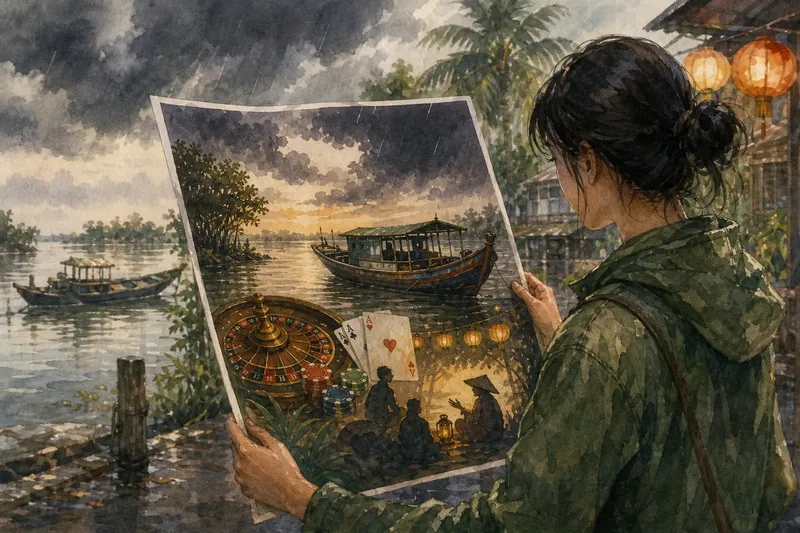
Then describe the design in plain terms. A painted boat, rain clouds or riverbank are visible features; “a local tradition” is an interpretation unless the organiser explains that connection. The distinction matters because a casino-themed event can borrow regional imagery for atmosphere without claiming to represent a particular custom or story.
- Venue: If a venue and address are printed, record both; if the poster gives only a landscape or evocative phrase, ask the organiser for the actual location.
- Date: If a date is legible, copy it; if the design only suggests a season, do not treat that image as an event date or seasonal occasion.
- Programme: If specific casino activities are named, note them; if the wording is broad, request a programme before deciding what to expect.
- Storytelling: If a storyteller or tale is identified, record the exact wording; if neither appears, treat the reference as unspecified and ask for details if it affects your plans.
- Customs: If the poster explains a custom and its place in the event, record that as the organiser’s description; if it supplies only a cultural label, ask what the label refers to.
- Entry conditions: If booking and access terms are readable, note them; if terms are absent or hard to read, ask for a clear version before making arrangements.
What is not worth the effort? Trying to assign a hidden meaning to every colour, flourish or weather motif. Concentrate on details that could affect your plans or imply a specific venue, story, custom or activity.
Seasonal signals
Cà Mau’s waterways and changing weather can give a poster a strong sense of place. Yet an image of a boat or rain may be decorative, a seasonal theme or a reference to a story. The artwork alone cannot tell you which. Look for a caption or programme note that makes the connection explicit.
Say you see an invented poster for a casino-themed evening in Cà Mau. It names a community hall and a date, shows a boat beneath dark clouds, and advertises “stories by the water” without naming a storyteller or programme. You can record the hall and date as stated details, describe the boat and clouds as design, and mark the storytelling as unspecified. If that programme matters to you, ask the organiser whether a storyteller is scheduled; the poster does not answer that question.
When you discuss the event, keep the wording precise. “The artwork shows a boat” describes what is visible. “The event follows a local river custom” makes a claim about cultural practice and needs an explanation from the organiser or another clear source.
Wording that needs context?
Does “by the river” name a venue?
Not on its own; it could describe a theme rather than the event’s location. Look for a venue name and address, then ask the organiser if either is missing.
Does seasonal imagery identify a custom?
No; it establishes only what the design depicts. Treat a cultural connection as unconfirmed unless the poster or organiser explains the practice and its role in the event.
How should I read a story reference?
Check whether the poster names a tale, storyteller or source. Without one, describe the wording as a general storytelling theme and ask for the programme if you need more detail.
What if the casino programme is vague?
A broad phrase such as “casino evening” may not tell you which activities are planned. Request the programme and relevant entry conditions before deciding whether the event suits you.
Read the conditions
Posters often make the headline prominent and place booking or access details in smaller type. Scan the margins, look for notes marked with an asterisk, and read each qualification beside the phrase it changes. If the print is unclear, ask for a readable copy.
For instance, “special access” is not enough to explain what arrangements are available. Note the exact phrase and ask the organiser what it means if access affects your plans. If cultural wording appears in the headline but the conditions describe a private casino event, retain both details in your reading rather than letting the theme stand in for the practical terms.
Keep useful notes
Use separate notes for printed claims, visible design and unanswered questions. Check each item and let the result guide your next move:
- Venue: If the poster names a venue clearly, copy it; if not, ask for the location before planning a journey.
- Date and season: If a date and seasonal wording are both printed, record them separately; if only the artwork suggests a season, label it as design and do not infer an occasion.
- Story source: If a tale or storyteller is named, copy the wording; if neither is named, leave the reference unspecified and ask for programme details if needed.
- Custom description: If the poster explains a custom’s connection to the event, note it as the organiser’s description; if it gives only a label, ask for clarification or leave the connection open.
- Casino activities: If individual activities are listed, record them; if the poster uses a broad phrase, request the programme before deciding what to expect.
- Entry terms: If booking and access conditions are legible, include them in your notes; if they are missing or hard to read, ask the organiser for a clear version.
Reading a casino poster in Cà Mau this way lets you notice how seasonal imagery and local storytelling shape its mood without turning design into evidence of a custom. When something matters to your plans, a precise question about the venue, programme or organiser’s intended reference is more useful than a guess.